
Digital Upwelling / Fishing Industry
The Fishing Industry Has a Visibility Problem
Many charter operations, lodges, guide services, and tackle businesses are structurally invisible in search and AI-generated answers.
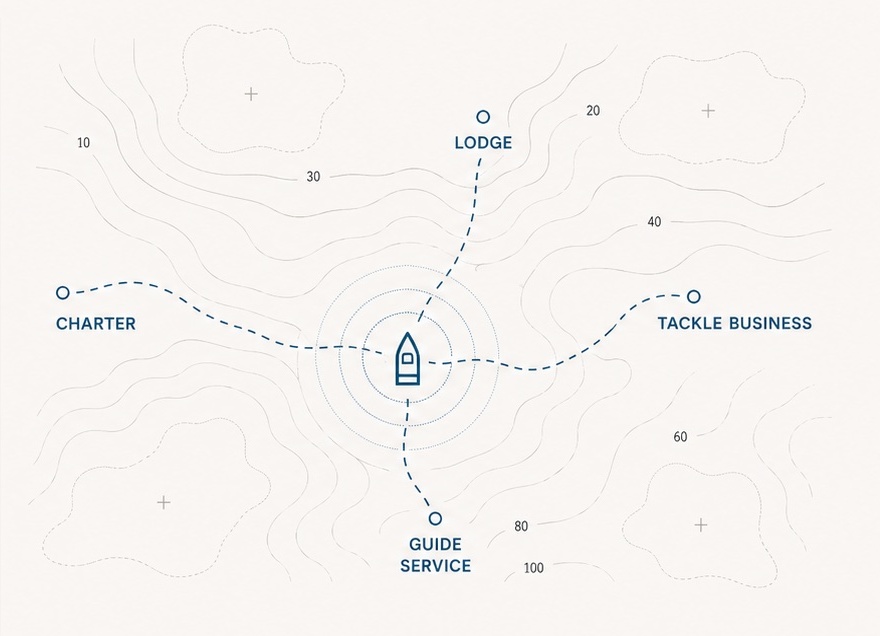
Content Architecture
Scattered pages and weak site structure limit discoverability.
AI-Legible Structure
Unclear semantics and inconsistent markup block comprehension.
Entity Definition
Undeclared or ambiguous entities prevent inclusion in AI-generated answers.
Booking Infrastructure
Disconnected systems create friction and erode trust signals.
Charter operations, sportfishing lodges, and guide services sit in a category with real commercial demand and almost no competitive digital infrastructure. Anglers search. They research destinations, compare captains, read about target species, and make booking decisions based on what they find online. Most fishing businesses are not showing up where that research happens. That was always a missed opportunity. Search is changing in ways that are making it a structural one.
What the problem actually looks like
The surface symptoms are familiar: low organic traffic, poor local search presence, a booking flow that leaks, a site that does not communicate authority on the species, destinations, and techniques that define the operation. The causes run deeper than aesthetics or outdated design.
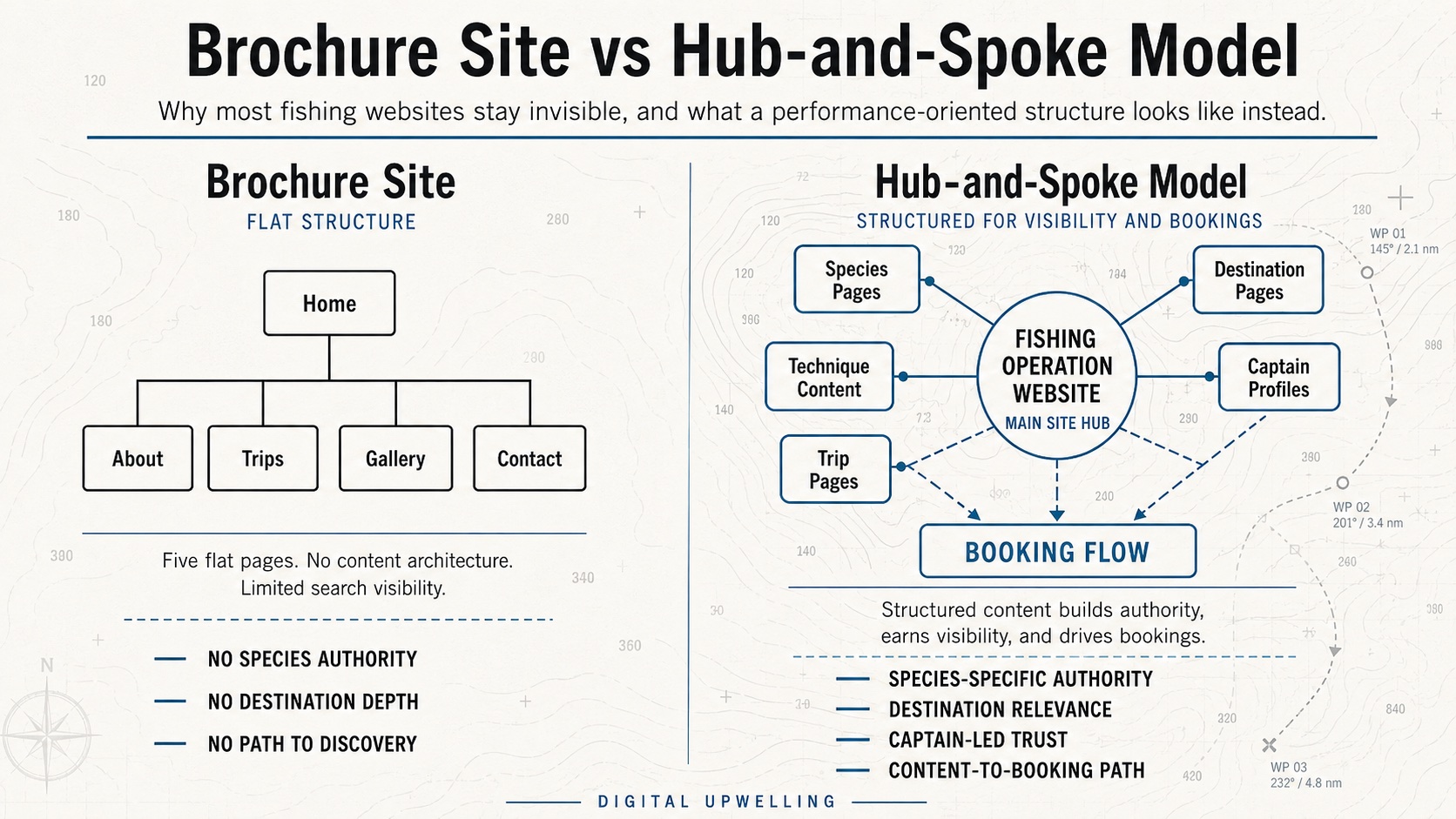
Most fishing websites have a home page, an about page, a few trip descriptions, and a contact form. That is not a site that earns search visibility. It is a brochure that happens to be online. Content that is not organized around the questions anglers actually ask, with clear extractable answers, will not appear in AI-generated summaries. It will not be cited. It will not be found by the growing share of searchers who never reach a results page at all.
Search engines and AI systems also need to understand what a business is, where it operates, what it offers, and who should trust it. Schema markup, internal linking, and structured metadata do that work. Most fishing sites have none of it. And booking infrastructure is its own category of problem: international deposits, seasonal packaging, multi-species itineraries, and trip customization are common in this industry. Generic booking plugins do not handle them cleanly, and the friction costs bookings.
These are solvable problems. They require actual infrastructure work, not a template swap.
Where domain knowledge changes the outcome
Most web development firms do not fish. They do not know the difference between a marlin season and a sailfish season, why a guide operation in Homosassa runs differently than a lodge in Costa Rica, or how anglers search for fishing destinations at different stages of the research process. That gap shows up in the work.
I founded In The Spread in 2014 and have spent more than a decade building content and technical infrastructure in the fishing space. When I am designing information architecture for a fishing operation, the domain knowledge is not borrowed. It shapes how the structure gets designed, how content gets organized around the searches that actually drive bookings, and how the entity definition gets built so that AI systems recognize the operation as an authority on its specific species, destinations, and techniques.
What this looks like in practice
The Colio Sportfishing engagement in Costa Rica is the clearest illustration. The project combined hub-and-spoke information architecture built around the species, destinations, and techniques that define the operation, captain-led brand positioning, and a custom checkout system that handles international deposit-and-balance splits, Costa Rica VAT logic, and multi-property package bundling natively. The site launched with ten blog posts already published, giving the editorial spine immediate topical authority.
The result is a captain-led operation with the transactional sophistication and search infrastructure of a much larger company. That is the benchmark: not a better-looking template, but a site built to perform against the searches that produce bookings.
Who this work is for
The operations this work makes sense for tend to share a specific profile. Lodge and multi-boat charter operations with real booking volume and the revenue to justify infrastructure investment. Captain-led businesses that have built genuine authority and need a digital presence that reflects it. Fishing media and education platforms running on subscriptions, content, or course delivery that need custom platform architecture to match. Tackle brands and industry organizations with marketing programs that need to earn visibility in traditional and AI search.
If the current site is underperforming relative to the actual quality of the operation, that gap is almost always structural. The content, the architecture, and the entity definition are either not there or not organized in a way that AI systems and search engines can use. That is the problem worth solving.
Where to go from here
The two posts most directly relevant to the underlying mechanics are AEO vs GEO: What’s the Difference and Why It Matters, which covers how AI systems extract and cite content differently and why that distinction drives the content architecture decisions, and Should You Block AI Crawlers?, which covers the access decisions that determine whether AI systems can surface the operation in the first place.
For how I approach engagements, see the AI Search Visibility service page.